
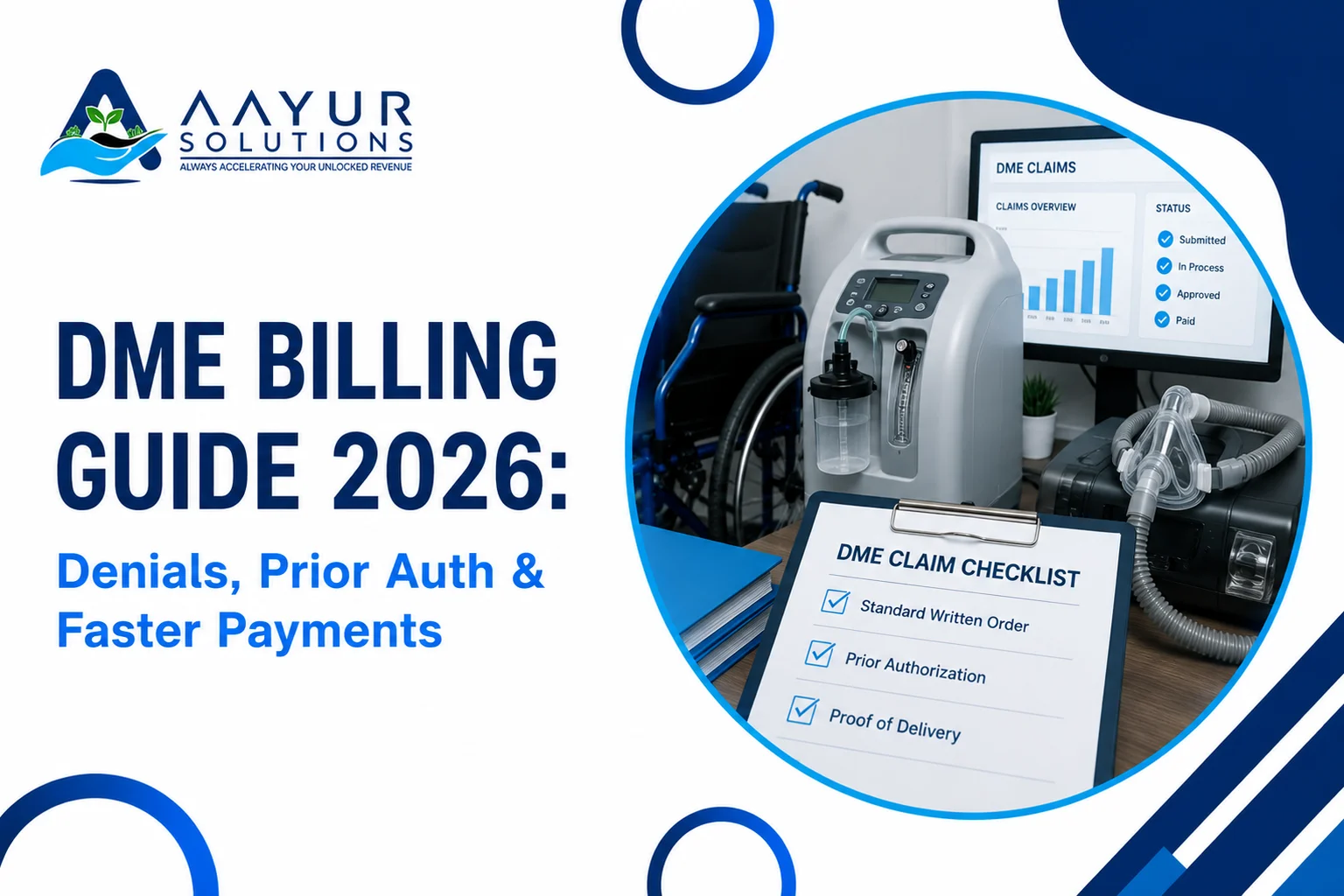
Durable Medical Equipment billing is the hardest discipline in medical billing — and suppliers know it. A single oxygen concentrator claim can require a physician’s order, chart notes proving medical necessity, a Certificate of Medical Necessity, prior authorization, proof of delivery, and the correct HCPCS code with the right modifiers — and one missing element means no payment.
This guide walks through the entire DME billing lifecycle, the denial codes that drain supplier revenue, and the specific fixes high-performing HME businesses use to keep cash flowing in 2026.
Why DME Billing Is Different From Standard Medical Billing
Physician billing bills for services rendered. DME billing bills for equipment supplied — and that changes everything:
- HCPCS Level II codes (E-codes, K-codes, A-codes) instead of CPT
- Rental vs purchase logic — capped rentals, 13-month cycles, continued-use requirements
- Documentation lives with the referring physician, not with you — yet you eat the denial when their notes are thin
- Same or Similar denials — Medicare denies equipment if the beneficiary received similar equipment within 5 years
- Proof of delivery requirements with strict format rules
- Competitive bidding — back on the table with CMS’s DMEPOS program returning
- Modifiers carry the claim: NU, RR, KX, GA, KH/KI/KJ — wrong modifier, no payment
The DME Claim Lifecycle — Where Money Leaks at Each Step
1. Intake and Insurance Verification
Every clean claim starts here. Verify: active coverage, DME benefits, deductible status, rental vs purchase rules for that payer, and same/similar history (check Medicare’s HETS or the DME MAC portal before delivery). Suppliers who skip the same/similar check ship equipment they will never be paid for.
2. Physician Documentation and the Standard Written Order
Since the Master List reforms, most DMEPOS items require a Standard Written Order (SWO) before delivery. High-risk items also need face-to-face encounter documentation. The order must show: beneficiary name, item description, quantity, physician signature and date, and NPI. Incomplete SWOs are the #1 preventable DME denial.
3. Prior Authorization
CMS’s Required Prior Authorization List covers power wheelchairs, pressure-reducing support surfaces, and more. Commercial payers and Medicare Advantage plans require prior auth on far more. Track every auth number, its date window, and the exact HCPCS codes approved. For the complete process, see our prior authorization guide.
4. Delivery and Proof of Delivery
POD must include beneficiary (or designee) signature, delivery date, item description, and quantity. For shipped items, tracking plus shipping records qualify — but the delivery date on the claim must match the POD date. Mismatched dates trigger audits.
5. Claim Submission — HCPCS, Modifiers, and Rentals
| Modifier | Meaning | Miss it and… |
|---|---|---|
| NU | New equipment purchase | Claim processes as rental |
| RR | Rental | Wrong reimbursement schedule |
| KX | Documentation on file meets policy | Automatic denial on many E-codes |
| GA | ABN on file (expected non-coverage) | You can’t bill the patient |
| KH / KI / KJ | Capped rental months 1 / 2–3 / 4–13 | Rental cycle breaks |
6. Payment Posting, Denial Management, and AR Follow-Up
DME AR ages fast because resupply claims recur monthly — one unresolved denial repeats itself every month until someone fixes the root cause. Denials older than 90 days recover at less than half the rate of denials worked within 2 weeks.
The 7 DME Denial Codes That Drain the Most Revenue
- CO-50 — Not medically necessary. The chart notes don’t support the item. Fix: get the clinical documentation before delivery, not after the denial.
- CO-M3 / Same or Similar. Equipment of the same type already on file. Fix: HETS/portal check at intake, every time.
- CO-16 — Missing information. Usually a missing/invalid ordering physician NPI, or missing KX. Fix: claim-scrub rules per HCPCS.
- CO-176 — Prescription/order incomplete. SWO missing elements. Fix: SWO checklist at intake; reject incomplete orders back to the referrer same-day.
- PR-49 / routine exam-linked orders. Item ordered off a visit type the payer excludes. Fix: verify covered diagnosis before dispensing.
- CO-109 — Wrong payer/jurisdiction. Wrong DME MAC or the patient switched to a Medicare Advantage plan. Fix: re-verify coverage monthly for rentals and resupply.
- CO-151 — Frequency limits. Resupply billed too soon or beyond allowed quantity. Fix: payer-specific resupply calendars — never auto-ship without confirming use.
Rental Billing: Where HME Cash Flow Goes to Die
Capped rentals (most E-code equipment) pay across 13 months, then convert. Every month you must re-confirm: patient still using the item, still eligible, still with the same payer. The three rental killers:
- Payer changes mid-cycle — Medicare Advantage plan switches each January silently break rental chains. Re-verify all rental patients every January.
- Missed continued-use documentation — for items like CPAP, missing compliance data ends coverage at month 3.
- Death, discharge, or facility admission — bill through the event date only; overbilling triggers recoupment plus audit exposure.
KPIs Every DME Supplier Should Track Monthly
| KPI | Healthy target |
|---|---|
| First-pass clean claim rate | 95%+ |
| Denial rate | Under 8% (DME runs higher than physician billing) |
| Days Sales Outstanding (DSO) | Under 45 days |
| Same/similar denials per month | Zero — fully preventable |
| Rental continuation rate | 90%+ of active cycles billed on time |
| AR over 90 days | Under 15% of total AR |
In-House vs Outsourced DME Billing
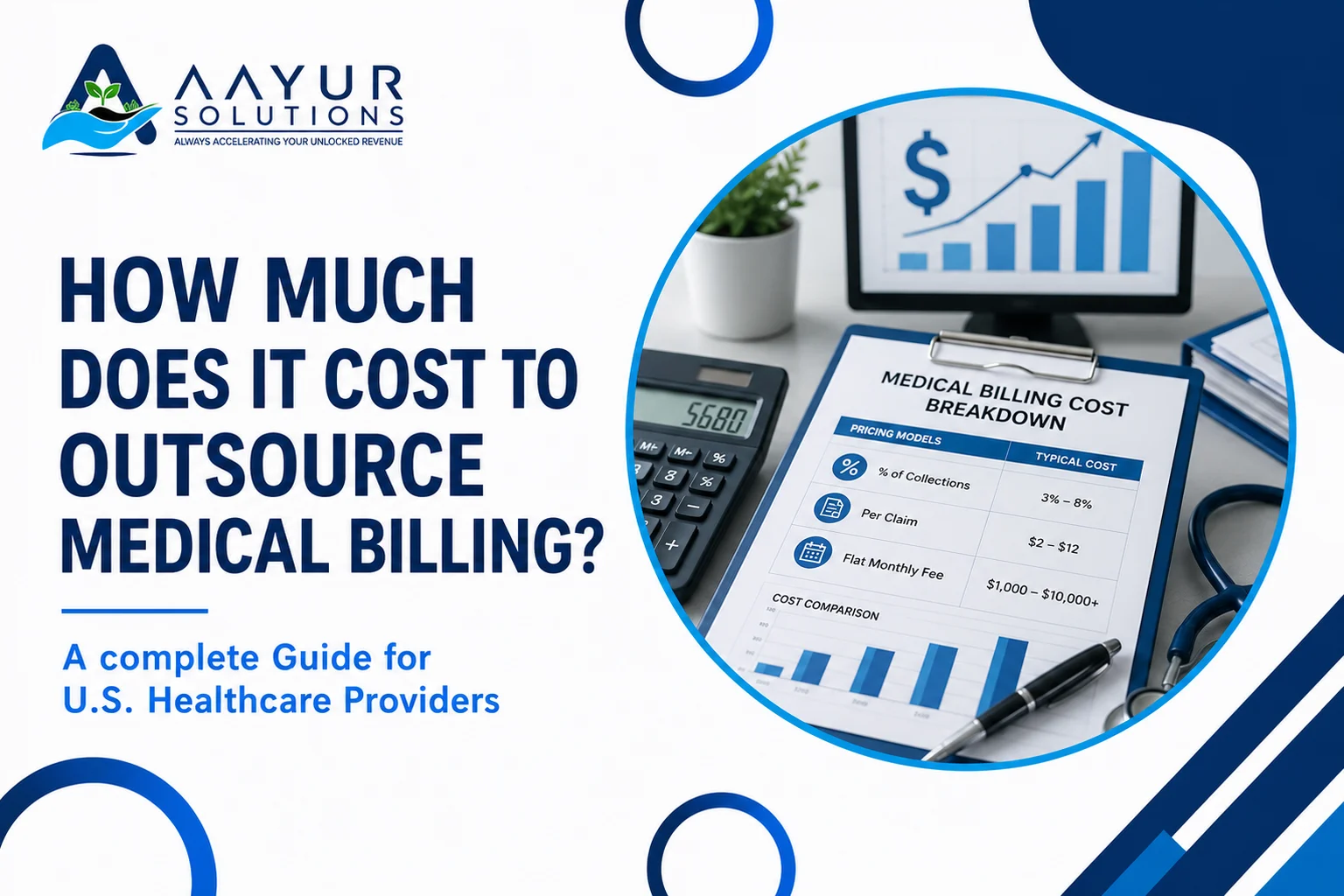
DME billing expertise is rare — a general medical biller does not know KX-modifier policy or capped-rental logic, and training one takes a year. That scarcity is why many suppliers outsource to a DME-specialized billing partner rather than a generalist firm. The evaluation question is simple: how many DME/HME clients do you serve today, and what is their average DSO? For the full cost breakdown, see how much does it cost to outsource medical billing.
Frequently Asked Questions
What does DME billing mean?
DME billing is the process of submitting and managing insurance claims for durable medical equipment — wheelchairs, oxygen equipment, CPAP machines, hospital beds, prosthetics, and medical supplies — using HCPCS Level II codes, equipment modifiers, and payer-specific documentation rules.
What is a same or similar denial in DME billing?
Medicare denies DME claims when the beneficiary already received the same or similar equipment within the item’s reasonable useful lifetime (usually 5 years). It is fully preventable by checking the beneficiary’s equipment history through HETS or the DME MAC portal before delivery.
What is the KX modifier in DME billing?
KX certifies that the documentation required by the payer’s medical policy is on file with the supplier. Many E-codes deny automatically without it — but appending KX without actually holding the documentation is a compliance risk.
How long does Medicare pay rental on DME equipment?
Most capped-rental items pay for 13 months of continuous use, after which ownership transfers to the beneficiary. Oxygen equipment follows a 36-month payment cap with a 5-year supplier service obligation.
Why are DME claims denied more often than physician claims?
Because payment depends on documentation created by a third party (the referring physician), plus equipment-specific rules — same/similar history, modifiers, proof of delivery, frequency limits, and prior authorization — that don’t exist in professional billing.
Stop Losing Equipment Revenue to Preventable Denials
Every same/similar denial, broken rental cycle, and incomplete SWO is money your business already earned. Aayur Solutions specializes in DME and HME billing — intake verification, same/similar checks, prior authorization, clean claim submission, rental cycle management, and denial recovery, all handled by a team that works DME claims every day.
Request a free DME billing assessment from Aayur Solutions →